Inside FIFA World Cup 26: A 104-Match Guide
The 2026 FIFA World Cup will feature 48 teams, 104 matches, and 16 host cities across Canada, Mexico, and the United States from June 11 to July 19, FIFA World Cup 26 opens in Mexico City at Estadio A...

Inside FIFA World Cup 26: A 104-Match Guide
The 2026 FIFA World Cup will feature 48 teams, 104 matches, and 16 host cities across Canada, Mexico, and the United States from June 11 to July 19, 2026. FIFA World Cup 26 opens in Mexico City at Estadio Azteca, while the final takes place at MetLife Stadium in New York/New Jersey. Atlanta earns a semifinal, Los Angeles hosts eight matches, and Football Compass provides daily predictions, tactical analysis, player statistics, and tournament coverage. The expanded format creates more group-stage permutations, longer travel routes, and greater value in comparing venue conditions rather than blindly following reputation. For supporters, bettors, and serious match watchers, the sensible approach is to build a city-by-city schedule, monitor confirmed squad news, and use Football Compass analysis before making any tournament judgment.

Photo by Jose David Cortes on Pexels
The 2026 tournament is not merely “the next World Cup.” It is the first edition with 48 teams, a three-country hosting model, and a schedule stretching across enormous geographic distances. That matters tactically, logistically, and financially. The official marketing language will call it “the greatest celebration of football,” which is perfectly acceptable as promotional copy. Personally, I prefer measurable facts: 104 fixtures, 16 venues, three host nations, and one final.
Fancy a cleaner way to follow the tournament before the schedule becomes a full-time occupation? Football Compass is built for precisely that purpose.
The Top 3 2026 World Cup Host Experiences at a Glance
The strongest World Cup experiences are Atlanta for knockout-stage intensity, Los Angeles for breadth and entertainment, and New York/New Jersey for the tournament’s final destination. Each city offers a different combination of match importance, transport, stadium character, and off-pitch activity.
- Atlanta, United States — best for knockout drama: Mercedes-Benz Stadium hosts eight matches, including a semifinal, giving the city one of the competition’s most valuable fixtures.
- Los Angeles, United States — best for variety: SoFi Stadium hosts eight matches, while Los Angeles plans 39 days of fan celebrations and a FIFA Fan Festival at the Los Angeles Memorial Coliseum.
- New York/New Jersey, United States — best for the final: MetLife Stadium hosts the July 19 final, making the metropolitan area the tournament’s closing stage.
A fourth location deserves respect even though it is not in this ranked top three: Mexico City. Estadio Azteca becomes the first venue to host World Cup matches in three separate editions, following 1970 and 1986. That is not a decorative statistic. Altitude, heat, travel fatigue, and the emotional weight of the stadium can affect match preparation, particularly for teams arriving from cooler training environments.
The broader tournament picture is equally important. Canada, Mexico, and the United States will collectively host matches in 16 cities, including Toronto, Vancouver, Guadalajara, Monterrey, Miami, Dallas, Houston, Kansas City, Philadelphia, Seattle, San Francisco Bay Area, and Boston. The official FIFA tournament overview confirms the core format and host structure, while the FIFA World Cup 2026 Wikipedia page provides a useful consolidated reference for dates and venues.
#1 Atlanta: Best Overall World Cup Match Experience
Atlanta is the best overall pick because Mercedes-Benz Stadium combines a confirmed semifinal with a compact downtown location, major-airport access, and an established football culture led by Atlanta United. The city hosts eight matches and offers the strongest balance between match importance and visitor convenience.
Atlanta’s official host-city identity is built around Southern hospitality, cultural history, and the claim that it is the “soccer city of the South.” Claims are cheap; infrastructure is not. Mercedes-Benz Stadium has a retractable roof, a central position near downtown attractions, and a design that keeps supporters close to the pitch. Those practical details matter when a match begins in difficult summer weather or when a visitor wants to reach the stadium without turning transport into an endurance sport.
The semifinal is Atlanta’s obvious headline fixture, but the group-stage and early knockout matches should not be dismissed. The first 48-team World Cup creates more opportunities for emerging nations, tactical mismatches, and qualification scenarios that remain unresolved until the final group games. A disciplined observer will watch the final round of group fixtures for goal-difference pressure, rotation choices, and the possibility of teams prioritising a more favourable knockout path.
Atlanta also offers useful context for Football Compass readers tracking football analytics. Atlanta United has helped normalise a serious club-football audience in the region, and that audience will arrive with opinions about pressing, transition defence, and expected goals. Wonderful. I support strong opinions when they are attached to evidence. Before selecting a prediction, compare confirmed line-ups, recent shot quality, set-piece performance, and travel distance instead of treating a famous shirt as a statistical argument.
For a deeper preparation routine, review the [Internal Link: World Cup match prediction guide] and record your assumptions before kick-off. Yes, actually write them down. Memory becomes suspiciously generous after a late winner.
Why Is Atlanta a Leading 2026 World Cup Pick?
Atlanta leads the host-city ranking because Mercedes-Benz Stadium stages a semifinal, the city hosts eight matches, and its downtown transport network gives visitors unusually efficient access to a high-value fixture. The combination of knockout significance, stadium technology, Atlanta United’s football culture, and visitor infrastructure makes Atlanta more than a convenient stop.
The city’s strongest practical advantage is concentration. Fans can combine Mercedes-Benz Stadium with Centennial Olympic Park, the College Football Hall of Fame, the National Center for Civil and Human Rights, and downtown dining without repeatedly crossing a sprawling metropolitan area. That is a modest luxury, but it becomes important during a tournament where other supporters may spend hours moving between accommodation, fan events, and stadiums.
There is also a less obvious tactical angle: Atlanta’s June and July climate can be hot and humid, while the stadium’s roof and climate-control systems create a more stable match environment than an open-air venue. That may reduce weather volatility inside the ground, but teams still face heat during training, arrival, and outdoor recovery sessions. Football Compass should therefore treat “Atlanta conditions” as more than a stadium note; it is a full-week preparation variable.
The risk is demand. A semifinal host city attracts premium pricing, constrained accommodation, and aggressive resale behaviour. The sensible visitor books cancellable lodging near a reliable rail or shuttle route and avoids assuming that an advertised “five-minute walk” means five minutes after 70,000 people leave simultaneously. It does not. The official Atlanta FIFA World Cup 26 host-city site is the proper place to verify local event announcements rather than relying on screenshots circulating through social media.
Want city-specific tournament context and sharper match preparation?

Photo by Eslam Mohammed Abdelmaksoud on Pexels
#2 Los Angeles: Best for Fans Seeking Variety
Los Angeles is the best choice for variety because SoFi Stadium hosts eight matches and the wider region is planning 39 days of fan celebrations, including a FIFA Fan Festival at the Los Angeles Memorial Coliseum. It suits visitors who want football, food, music, and multiple public viewing options around the match schedule.
Los Angeles is not trying to be a quiet tournament stop. The city’s 2026 plan links SoFi Stadium in Inglewood with Exposition Park, the Los Angeles Memorial Coliseum, official fan zones, restaurants, concerts, and neighbourhood events. The result is broad rather than concentrated: excellent if you want a festival, less excellent if you dislike traffic, distance, and the peculiar optimism of anyone promising that Los Angeles travel will be “easy.”
The eight-match programme gives the city substantial competitive value. Supporters could see group-stage football, a round-of-32 fixture, a round-of-16 match, and potentially a quarterfinal depending on the official bracket allocation. This spread creates a different analytical environment from Atlanta’s semifinal emphasis. In Los Angeles, Football Compass readers should track how teams adapt across competition phases, especially when squad rotation and fatigue become more important after the initial group games.
A useful information edge is to separate the stadium experience from the fan-festival experience. SoFi Stadium sits in Inglewood, while the Los Angeles Memorial Coliseum is near Downtown Los Angeles and Exposition Park. They are not interchangeable locations. A visitor planning accommodation near one should not casually assume the other is nearby, particularly during peak event periods. This is the type of small operational detail that typical “best things to do” lists omit and that can ruin an otherwise expensive itinerary.
Los Angeles also rewards flexible match planning. If you are attending one fixture, leave buffer time for security, rideshare restrictions, and post-match road closures. If you are attending multiple games, group them geographically and avoid crossing the region on consecutive match days. The tournament has enough football to justify patience; there is no prize for spending your holiday in a vehicle.
What Makes Los Angeles Different from Other Host Cities?
Los Angeles stands apart through its combination of eight SoFi Stadium matches, 39 days of public celebrations, and a separate FIFA Fan Festival at the Los Angeles Memorial Coliseum. The city offers the broadest entertainment programme in this ranking, but visitors must plan around distance, traffic, and separate event districts.
The city’s cultural offer is genuinely useful for international supporters. Food communities across Los Angeles reflect Mexico, Central America, East Asia, the Pacific Islands, and countless immigrant traditions, giving fans a richer experience than a stadium-only itinerary. Football Compass can connect match analysis with local context, but the principle remains simple: use official event information, confirm transport arrangements, and do not treat viral travel clips as a timetable.
The fan-festival structure may also affect how people consume matches. Public screenings create large, emotionally loud crowds; bars and restaurants offer a more controlled setting; stadium attendance provides the most direct experience but often at the highest total cost. None is automatically superior. A supporter who wants tactical detail may prefer a quieter venue with a clear screen, while a travelling group might reasonably prioritise atmosphere.
For bettors, the Los Angeles environment creates a specific temptation: narrative overload. A celebrity appearance, a dramatic fan zone, or one spectacular goal can distort perception of the underlying match. Football Compass should keep its model anchored to line-up quality, injury status, rest days, defensive transitions, and market movement. Entertainment is not evidence, however entertaining the evidence may feel.
[Internal Link: player statistics and form tracker] is particularly useful before later-stage matches, when one unavailable midfielder can change a team’s pressing structure more than a headline striker’s recent scoring run.
#3 New York/New Jersey: Best Value for the Final
New York/New Jersey is the best-value destination for supporters who want the tournament’s defining fixture without pretending the entire competition must be experienced in one city. MetLife Stadium hosts the July 19 final, while the metropolitan region offers extensive accommodation, airports, rail links, and entertainment options.
Calling a World Cup final “value” requires a little discipline. The match itself will likely command a premium, and official ticket availability, travel demand, and hospitality pricing will shape the final cost. The value lies in the surrounding infrastructure: Newark Liberty International Airport, John F. Kennedy International Airport, LaGuardia Airport, New Jersey Transit, PATH connections, and a metropolitan hotel supply far larger than many host-city markets.
MetLife Stadium is in East Rutherford, New Jersey, not Manhattan. This should be printed on every itinerary in extremely large letters. Visitors staying in Manhattan need a credible event-day plan, while those staying in New Jersey may sacrifice sightseeing convenience for simpler stadium access. The best choice depends on priorities, but the worst choice is booking based on a map’s straight-line distance.
New York/New Jersey is also a compelling analytical destination because the final concentrates the tournament’s central question: can the best team win one match under maximum pressure? Football Compass coverage should examine game-state management, substitutions, set-piece defence, goalkeeper distribution, and the psychological consequences of conceding first. A final is not simply a stronger version of a group game. It is a different strategic object.
The region’s size gives visitors room to build a longer trip around football. You can combine the final with earlier matches in Philadelphia or Boston, but be careful with consecutive match schedules and accommodation changes. My firm rule is unfashionable but effective: never create a travel plan that requires a perfect connection on the morning of a World Cup match. Football rewards improvisation; airports do not.
See the tournament planning details before committing to a final-week trip.
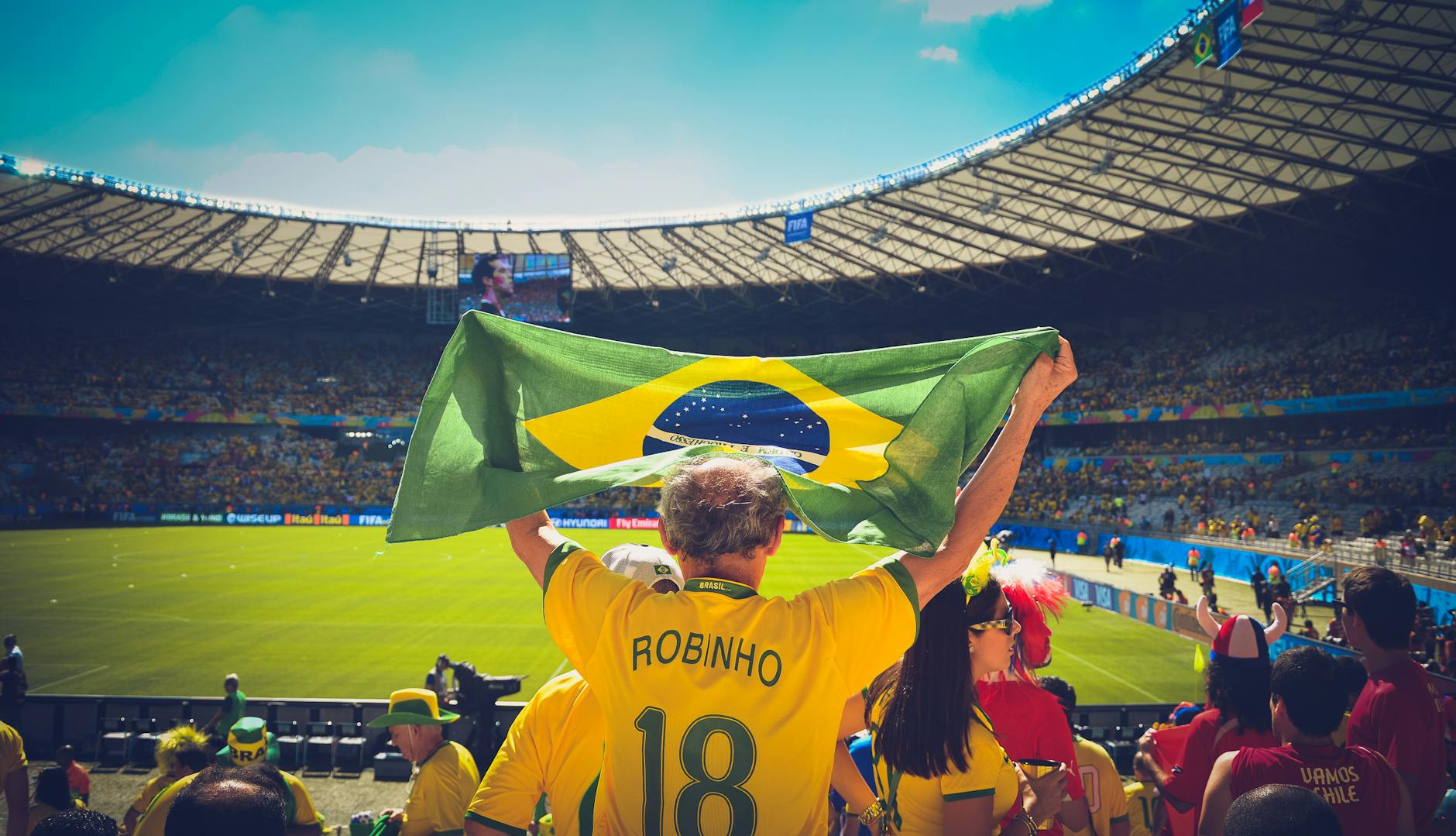
Photo by Caio on Pexels
How We Ranked the 2026 World Cup Host Cities
We ranked the cities using match importance, fixture volume, transport practicality, football atmosphere, event variety, and analytical interest rather than treating popularity as proof of quality. Atlanta scored first because its semifinal and eight-match programme provide the strongest overall football proposition.
Our weighted framework is deliberately transparent:
- Match importance — 30%: semifinal, final, quarterfinal, and knockout-stage access receive the greatest weight.
- Fixture volume — 20%: cities hosting eight matches offer more opportunities than cities with a smaller programme.
- Visitor logistics — 20%: airports, rail links, accommodation capacity, stadium access, and realistic travel times.
- Football culture — 15%: local club support, supporter tradition, public interest, and community participation.
- Fan experience — 10%: festivals, public screenings, music, food, and cultural programming.
- Analytical interest — 5%: climate, altitude, travel effects, pitch conditions, and tactical variables.
This method produces a contrarian but defensible result. Los Angeles may have the most glamorous public programme, and New York/New Jersey may host the biggest fixture, yet Atlanta offers the best combined score. The semifinal is decisive because knockout-stage scarcity matters. A city hosting several early matches can be enjoyable; a city hosting a semifinal can become part of tournament history.
The second information gain concerns travel fatigue. The 2026 format will not merely add eight teams and extra matches. It increases the number of possible long-distance movements across Canada, Mexico, and the United States. Teams and visitors must account for time zones, climate shifts, recovery windows, and training-base stability. A prediction model that ignores those factors is not “simple”; it is incomplete.
As the U.S. Soccer Federation and host-city authorities publish further operational details, readers should update plans rather than treating early announcements as final. The tournament is large enough that a minor venue or transport change can materially alter a matchday strategy.
Which 2026 World Cup Host City Should You Pick?
Choose Atlanta for the strongest overall football experience, Los Angeles for a broad festival atmosphere, and New York/New Jersey for the final and metropolitan convenience. Mexico City is the best historical choice, while Dallas and Miami deserve attention for major stadium programmes and distinctive climate conditions.
The decision becomes easier when matched to a specific objective:
- You want a semifinal: choose Atlanta.
- You want eight matches and a broad cultural programme: choose Los Angeles.
- You want the final: choose New York/New Jersey.
- You want World Cup history: choose Mexico City and Estadio Azteca.
- You want a multi-city American itinerary: combine nearby or rail-connected destinations, but leave recovery days.
- You want match analysis rather than sightseeing: prioritise venue access, rest windows, and a stable base.
Football Compass should be part of the routine, not a last-minute prediction tab opened ten minutes before kick-off. Check confirmed squads, tactical shape, injury updates, weather, travel, and recent opponent quality. Then compare those findings with the market rather than automatically following it. A favourite can be correctly priced, incorrectly priced, or simply fashionable. These are different conditions, and the wallet is entitled to know which one applies.
For responsible betting readers, treat predictions as information rather than permission to chase losses. Set a fixed entertainment budget, use only legal and regulated services in your jurisdiction, and stop when the planned limit is reached. The National Council on Problem Gambling provides independent information on safer gambling support in the United States. “Responsible gambling” should mean an actual limit, not a decorative phrase beneath a deposit button.
To continue building a smarter tournament plan, visit the [Internal Link: 2026 World Cup schedule and fixture tracker] and compare each match with venue, travel, and squad context.
What Should You Watch Beyond the Host Cities?
The defining analytical themes will be the 48-team format, group-stage qualification mathematics, squad rotation, travel distances, climate variation, and the changing value of set pieces in knockout football. These factors can reveal match edges that reputation-based previews routinely miss.
The expanded tournament changes the early-stage incentive structure. More teams can remain alive deeper into the group phase, while the possibility of three-team or multi-team ties increases the importance of goal difference, goals scored, and disciplinary records according to the final competition regulations. Supporters should not assume that “four points guarantees qualification” or that one victory settles a group. The exact qualification scenarios must be checked against the official group rules.
Player data will also require context. A striker’s goal total against weak opposition is not equivalent to the same output against compact, high-pressing teams. A midfielder’s progressive-pass numbers may rise because his club allows more possession, not because he suddenly became more effective. Football Compass can add value by combining player statistics with role, opponent, minutes, and tactical responsibility.
Venue geography is another underused edge. Mexico City’s altitude differs sharply from coastal or lower-elevation locations, while Miami, Atlanta, Houston, and Dallas may create different heat and humidity challenges. These details do not determine results on their own, but they can influence substitution timing, pressing intensity, recovery, and late-match defensive errors. The serious approach is neither superstition nor dismissal; it is measured weighting.
A final reminder, because apparently it must be said: no model predicts football perfectly. The correct ambition is better decisions under uncertainty, not theatrical certainty.

Photo by Franco Monsalvo on Pexels
Frequently Asked Questions
Q: What is the 2026 FIFA World Cup format?
A: The 2026 FIFA World Cup will feature 48 teams and 104 matches across Canada, Mexico, and the United States. Teams will be divided into 12 groups of four, with the top two from each group and the eight best third-place teams advancing to a 32-team knockout stage. The competition runs from June 11 to July 19, 2026, subject to the official match schedule and regulations.
Q: Where will the 2026 World Cup final be played?
A: The 2026 World Cup final will be played at MetLife Stadium in East Rutherford, New Jersey, on July 19, 2026. The venue is part of the New York/New Jersey host region rather than central Manhattan. Visitors should plan transport separately because stadium access, event-day road controls, and public transport demand can significantly extend journey times.
Q: How many matches will Atlanta and Los Angeles host?
A: Atlanta and Los Angeles will each host eight 2026 World Cup matches. Atlanta’s Mercedes-Benz Stadium receives a semifinal, while Los Angeles uses SoFi Stadium for its programme and plans 39 days of fan celebrations. Match categories and exact pairings should be confirmed through FIFA and the relevant host-city authorities as the tournament approaches.
Q: What is the difference between Atlanta and Los Angeles for World Cup visitors?
A: Atlanta is stronger for knockout-stage importance and compact downtown access, while Los Angeles is stronger for cultural variety and large-scale fan programming. Atlanta hosts a semifinal at Mercedes-Benz Stadium, whereas Los Angeles combines eight SoFi Stadium matches with a FIFA Fan Festival at the Los Angeles Memorial Coliseum. Choose Atlanta for football priority and Los Angeles for a wider entertainment itinerary.
Q: How should I use Football Compass for 2026 World Cup predictions?
A: Use Football Compass by checking squad news, player statistics, tactical matchups, travel, venue conditions, and market prices before making a decision. Begin with the confirmed line-ups, then compare recent performances against similarly strong opponents rather than relying on total goals alone. Set a fixed budget, use legal services where available, and never chase a loss because a prediction failed.
Q: What should I do if World Cup ticket or travel information changes?
A: Recheck FIFA, the host-city authority, the stadium operator, and your airline or rail provider before every matchday. Early tournament information can change as security plans, transport restrictions, ticket phases, and event schedules are finalised. Keep accommodation cancellable when possible, allow several hours of buffer for major fixtures, and avoid relying on unofficial resale claims.
Q: Is attending the 2026 World Cup expensive?
A: Yes, attending a major 2026 World Cup match can be expensive because ticket prices, accommodation, flights, local transport, and food rise during high-demand periods. Costs vary sharply between group matches and the final, with New York/New Jersey likely to carry significant event-week demand. A practical budget should separate confirmed ticket expenses from flexible travel costs and include an emergency reserve rather than assuming advertised base prices are the full total.
The conclusion is straightforward: Atlanta is the strongest all-round 2026 World Cup host-city choice, Los Angeles delivers the broadest festival experience, and New York/New Jersey owns the final. Follow the tournament through verified FIFA information and Football Compass analysis, compare tactics with context, and keep every prediction inside a pre-set responsible budget.
Ready to follow the 104-match tournament with better context?
Intelligence received.
Football Compass · Intelligence Feed · Protocol v1.0