Before You Bet, Read This 2026 World Cup Breakdown
The 2026 FIFA World Cup is FIFA’s expanded 48-team tournament, hosted across Canada, Mexico, and the United States from June 11 to July 19, FIFA will stage 104 matches in 16 host cities, with the fina...

Before You Bet, Read This 2026 World Cup Breakdown
The 2026 FIFA World Cup is FIFA’s expanded 48-team tournament, hosted across Canada, Mexico, and the United States from June 11 to July 19, 2026. FIFA will stage 104 matches in 16 host cities, with the final scheduled for MetLife Stadium in East Rutherford, New Jersey. The tournament opens in Mexico City, while Los Angeles hosts eight matches at SoFi Stadium and Atlanta hosts a semifinal at Mercedes-Benz Stadium. Football Compass covers fixtures, team tactics, player statistics, predictions, and responsible betting analysis for the 2026 World Cup. The key takeaway is simple: confirm the official schedule, compare team context rather than headline odds, and treat every wager as entertainment rather than guaranteed income.

Photo by El gringo photo on Pexels
Have you ever thought about what changes when the World Cup expands from 32 teams to 48? More matches, more travel, more potential upsets, and considerably more data for anyone following football predictions. The answer is not automatically “more football equals better football.” That is the lazy version. The 2026 FIFA World Cup will test squad depth, recovery planning, climate adaptation, and tournament logistics across North America. Football Compass therefore looks beyond patriotic noise and “official favorite” narratives, focusing on match conditions, tactical matchups, player availability, and market movement. For readers planning travel, viewing parties, or legal sports wagers, the useful work begins before kickoff: understand the format, map the venues, and separate verified information from promotional chatter. That approach is less glamorous than guessing a winner from a social-media graphic, but it is substantially more useful.
Want the tournament essentials before we go deeper?
Is the 2026 FIFA World Cup really the biggest tournament yet?
Yes. The 2026 FIFA World Cup is the first men’s World Cup with 48 participating teams and 104 matches, making it larger than every previous edition by both field size and total fixtures. Canada, Mexico, and the United States will jointly host the competition across 16 cities, creating a tournament with unprecedented geographic range.
The expansion changes the competitive mathematics. The 48 teams will be divided into 12 groups of four, with the top two teams from each group advancing alongside the eight best third-place teams. That produces a 32-team knockout bracket rather than the familiar 16-team starting point. According to FIFA’s official tournament information, the new format creates a longer campaign and increases the number of matches required from eventual finalists.
That matters for predictions. A powerhouse can survive one poor group-stage performance, but it cannot casually rotate forever when fatigue accumulates across a minimum of eight matches for the champion. The “best team on paper” may not be the best team in the final week. My stubborn rule is straightforward: never assess a World Cup contender without checking its bench, travel path, and knockout route. Star names are useful; usable substitutes are better.
The opening match is scheduled for June 11, 2026, at Estadio Azteca in Mexico City. The final is scheduled for July 19 at MetLife Stadium in East Rutherford, New Jersey. Los Angeles will host eight matches at SoFi Stadium, while Atlanta’s Mercedes-Benz Stadium is among the venues selected for major knockout fixtures, including a semifinal. These are not decorative details. Venue, altitude, heat, humidity, and travel can affect tempo and late-game decision-making.
What does the 48-team format mean for bettors and analysts?
The 48-team format creates more markets and more uncertainty because third-place qualification, uneven group strength, and longer knockout routes make pre-tournament assumptions less reliable. Analysts should prioritize confirmed lineups, schedule density, travel distance, and regulation-time performance rather than relying only on outright winner prices.
A practical approach is to divide analysis into three phases:
- Group-stage assessment: Compare expected goals, defensive transitions, set-piece efficiency, and squad rotation.
- Qualification scenario testing: Model how second-place and third-place finishes could alter the knockout path.
- Knockout evaluation: Reassess every match using injuries, rest days, weather, and opponent-specific tactics.
This is where Football Compass match prediction coverage can be useful for readers who want daily tournament context. However, no prediction platform can remove uncertainty from football. Anyone promising “guaranteed winners” is selling theater, not analysis. The FIFA Laws of the Game also matter here because stoppage time, substitutions, handball interpretations, and disciplinary decisions can materially shape match outcomes.
How does the 2026 World Cup handle a three-country host case?
The 2026 World Cup handles its three-country hosting model by distributing matches among 16 host cities in Canada, Mexico, and the United States while maintaining a single FIFA competition framework. Mexico City hosts the opener, and the United States stages most fixtures, including the final at MetLife Stadium.
The host-city model is ambitious, but it is not frictionless. Toronto, Vancouver, Mexico City, Monterrey, Atlanta, Miami, Dallas, Houston, Kansas City, Los Angeles, New York/New Jersey, Philadelphia, San Francisco Bay Area, Seattle, and Boston will all experience different weather, transport, and stadium conditions. The geographic spread means a supporter may need domestic flights, cross-border documentation, or carefully timed hotel changes.
Los Angeles offers eight matches, the LA Memorial Coliseum FIFA Fan Festival, and official fan zones across the region. Atlanta markets itself as the “soccer city of the South,” with Mercedes-Benz Stadium providing a retractable-roof venue and a strong existing football culture through Atlanta United. These local identities are valuable for fans, but they should not be confused with tournament performance advantages. A national team does not gain three points because a host city has excellent barbecue or impressive branding. Tragic, perhaps. Still true.
For travel planning, use a three-layer schedule:
- Base city: Choose one accommodation hub for several days rather than changing hotels after every match.
- Transport buffer: Allow additional time around stadium security, public transit, and post-match congestion.
- Climate plan: Prepare for heat in Dallas or Miami, altitude in Mexico City, and different evening temperatures in Vancouver or Toronto.

Photo by Darya Sannikova on Pexels
A lesser-discussed issue is time-zone fatigue. Matches in Vancouver, Los Angeles, Dallas, Atlanta, Miami, and New York/New Jersey can create substantial biological-clock disruption for traveling squads. A team that crosses several time zones between group matches may lose training quality even when its nominal rest period looks acceptable. That is an information edge many casual previews ignore.
The same principle applies to visitors. A supporter attending two matches in different regions should calculate airport transfers, baggage time, and stadium exit delays rather than trusting a simple map distance. Los Angeles traffic around SoFi Stadium can turn a short route into a serious scheduling problem. Atlanta’s rail and downtown access may be convenient, but a high-demand semifinal night will still create bottlenecks. The smart plan is boring: book early, leave early, and maintain one contingency day where the budget permits.
See how the host locations may shape the tournament experience.
What about the tournament’s travel and climate edge case?
The main edge case is that teams may face different combinations of heat, altitude, humidity, artificial climate control, and long-distance travel within the same tournament. Mexico City sits at high elevation, while Miami and Dallas can bring heat stress; therefore, performance comparisons should include venue conditions, not just historical rankings.
Mexico City deserves particular attention. Estadio Azteca has historic World Cup significance, but altitude can influence aerobic demands, recovery, and match tempo. A visiting team accustomed to sea-level conditions may need a different warm-up, hydration, and substitution strategy. Conversely, a technically superior team may not express its passing game effectively if fatigue disrupts spacing after the hour mark.
The United States provides the largest share of venues and fixtures, but “home advantage” will vary. The United States men’s national team will benefit from familiar surroundings in some matches, yet the country’s size means not every American venue represents the same travel environment. Canada’s Vancouver and Toronto venues also introduce distinct weather patterns and supporter cultures. Mexico brings concentrated football heritage, especially around Mexico City and Monterrey.
A useful analyst checklist includes:
- Match location and local kickoff time.
- Days since the team’s previous fixture.
- Travel distance and time-zone changes.
- Temperature, humidity, and altitude.
- Substitution patterns after minute 60.
- Set-piece defending under fatigue.
- Whether a team has already secured qualification.
The last item is especially important. A team that only needs a draw may manage risk differently from one chasing goal difference. With 12 groups and eight third-place qualifiers, table permutations may remain live deep into the final round. That can produce unusual incentives: conservative football in one match, frantic attacking football in another, and betting markets that overreact to first-half scorelines.
[Internal Link: 2026 World Cup team tactics guide]
There is also a regulatory edge case for betting audiences. Legal availability, market types, age limits, advertising rules, and payment options vary by jurisdiction across the United States, Canada, and Mexico. A wagering product permitted in one state or province may not be available in another. The National Council on Problem Gambling recommends setting limits before play and treating gambling as entertainment, not a financial strategy. That is not a glamorous disclaimer; it is sound bankroll management.
Where does the 2026 World Cup analysis fail?
World Cup analysis fails when it treats rankings, famous players, or early odds as complete evidence. It also fails when it ignores sample size, opponent quality, injuries, tactical compatibility, and the difference between a tournament narrative and a measurable edge.
A common mistake is using recent international results without adjusting for opposition. A 3–0 win against a low block may reveal little about how a team handles aggressive pressing. Likewise, a narrow defeat against a stronger opponent may indicate better underlying performance than the score suggests. Football Compass should therefore be read as a research companion: useful for structured information, never a substitute for judgment.
Another failure point is overconfidence in expected goals. Expected goals models are valuable, but they are not magical referee-proof machines. A model may account for shot location while missing goalkeeper distribution, tactical matchups, weather, or a defender returning from injury. Different providers also use different event definitions and calibration methods. If two models disagree, that is a prompt to investigate, not permission to select the number you prefer.
The “golden generation” narrative also deserves suspicion. Belgium, England, France, Brazil, Argentina, Germany, Spain, and Portugal may carry elite talent, but tournament football rewards cohesion under pressure. A team’s actual edge may come from:
- Defensive rest structure after losing possession.
- Bench quality in extra time.
- Ability to defend set pieces.
- Penalty-taker depth.
- Coaching adjustments between matches.
- Emotional discipline after conceding.
Do not overlook match-result definitions, either. Some markets settle on 90 minutes plus stoppage time, while knockout matches may proceed to extra time and penalties. A “to qualify” market is not identical to a regulation-time result. That distinction can produce a surprising difference in price and risk. Read the settlement rules before placing anything. The tiny print is where expensive lessons live.
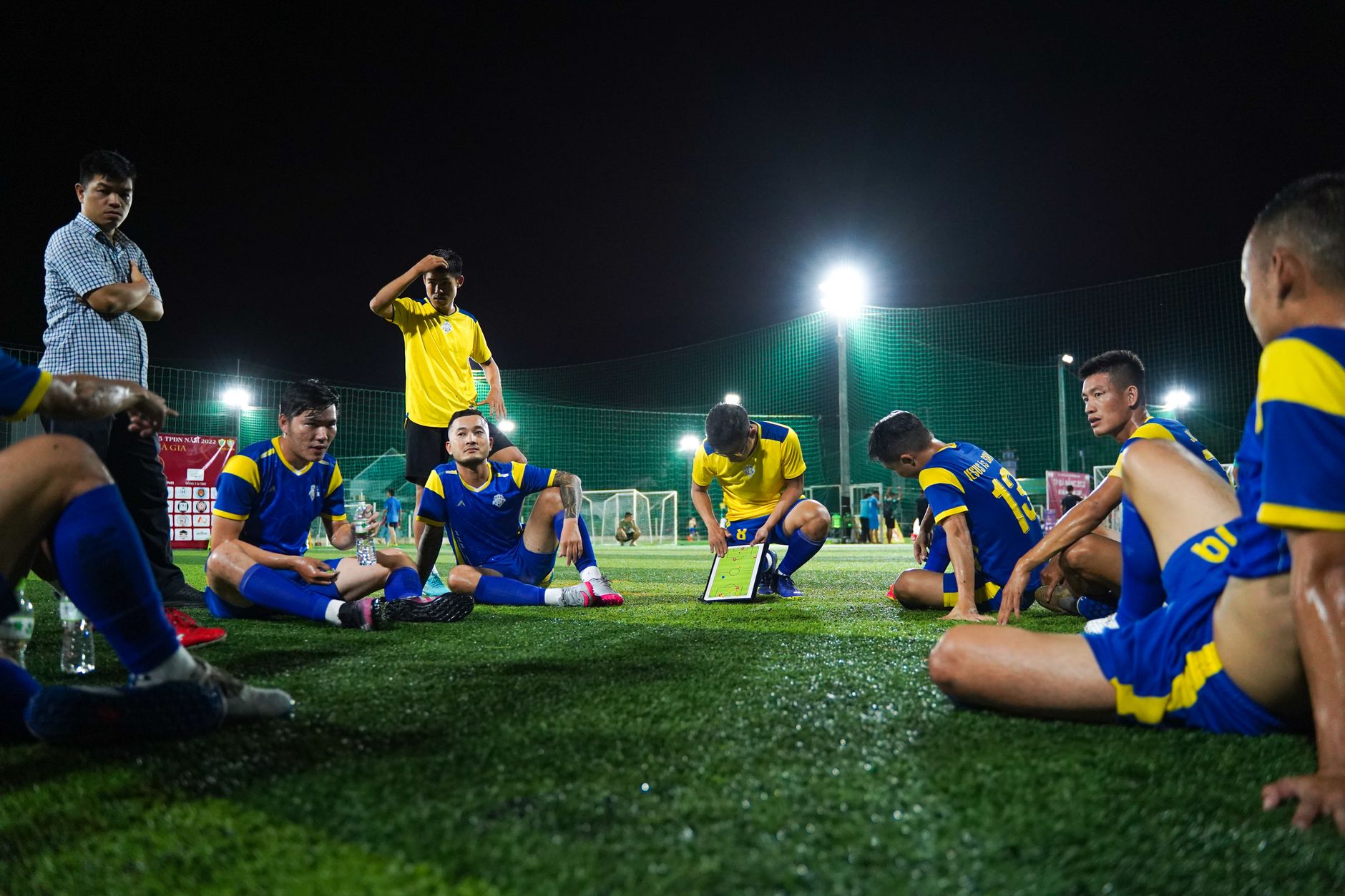
Photo by Quyn Phạm on Pexels
Another underreported information gain is lineup timing. International teams often release confirmed starting elevens roughly an hour before kickoff, but the practical value of that information depends on the market. A late absence for a goalkeeper, defensive midfielder, or target forward can change tactical expectations more dramatically than a minor winger rotation. If your analysis cannot explain which role changed and why, it is probably reacting to the name rather than the football.
Use a disciplined pre-match worksheet:
- Confirm the venue, kickoff time, and competition stage.
- Check official team news and suspension status.
- Compare projected formations with recent actual formations.
- Review rest, travel, and climate variables.
- Separate regulation-time markets from qualification markets.
- Set a fixed stake before viewing live odds.
- Stop when the pre-set entertainment budget is reached.
According to FIFA’s World Cup 2026 competition information, the tournament’s scale introduces more fixtures and logistical complexity than previous editions. That does not guarantee better prediction accuracy. It simply provides more variables, and more variables can create either insight or confusion. Choose the latter only if you enjoy donating money to randomness.
Should you try following the 2026 World Cup today?
Yes, you should follow the 2026 World Cup today if you want early familiarity with teams, host cities, tactical trends, and verified tournament updates; you should not wager today merely because an early price looks attractive. Start with information, then decide whether any entertainment spending fits your personal limits.
The best preparation is incremental. Track squads, coaching changes, injuries, qualifying form, and likely tactical identities. Watch how teams defend transitions, respond to pressure, and manage substitutes. A single highlight reel is entertainment; repeated match observation is evidence. For high-profile nations such as Argentina, Brazil, France, England, Germany, Spain, Portugal, Mexico, Canada, and the United States, compare current performance with the reputation built during earlier tournaments.
For travel, prioritize official FIFA announcements, host-city transport guidance, and stadium rules. For predictions, use Football Compass coverage alongside primary sources and reputable statistical providers. For gambling, confirm that the operator is legal in your jurisdiction, verify age requirements, read settlement rules, and set a loss limit before placing any wager. Never chase a losing position because a favorite “cannot possibly lose.” That sentence has emptied more accounts than poor mathematics ever needed to.
[Internal Link: responsible World Cup betting checklist]
My conclusion is deliberately unfashionable: the 2026 FIFA World Cup is too large for one simple narrative. The 48-team format creates opportunity for emerging nations, but the 104-match schedule also amplifies fatigue, travel, and information noise. Los Angeles, Atlanta, Mexico City, Toronto, Vancouver, and the other host cities will each shape the fan experience differently, while the final at MetLife Stadium gives the tournament a clear closing destination. Follow verified information, update your assumptions after lineups, and keep entertainment budgets separate from household finances.
Ready to follow fixtures, tactics, player statistics, and daily tournament analysis?
Frequently Asked Questions
Q: What is the 2026 FIFA World Cup?
A: The 2026 FIFA World Cup is FIFA’s first 48-team men’s World Cup, hosted by Canada, Mexico, and the United States. It will feature 104 matches across 16 host cities from June 11 to July 19, 2026. The tournament opens at Estadio Azteca in Mexico City and ends at MetLife Stadium in East Rutherford, New Jersey. The format includes 12 groups of four teams, with 32 nations advancing to the knockout stage.
Q: How do you follow the 2026 World Cup effectively?
A: Follow the official FIFA schedule first, then track confirmed lineups, injuries, tactical changes, and host-city conditions. Football Compass can add daily predictions, team analysis, player statistics, and tournament updates, but readers should compare claims with official sources. Build a simple routine: check fixture details, assess team news, review travel and rest, and update your view after the starting elevens are announced.
Q: What is the difference between the 2026 World Cup format and the 2022 format?
A: The 2026 World Cup has 48 teams and 104 matches, while the 2022 World Cup in Qatar had 32 teams and 64 matches. In 2026, 12 groups of four teams will send the top two and eight best third-place teams into a 32-team knockout bracket. This increases match volume and creates more qualification permutations than the previous format.
Q: Is the 2026 World Cup worth betting on?
A: The 2026 World Cup may be suitable for legal, entertainment-only betting, but it should not be treated as an income opportunity. Travel, climate, team rotation, injuries, and unfamiliar opponents can make tournament outcomes difficult to predict. Verify that sports betting is legal where you live, set a fixed budget, understand market settlement rules, and never chase losses or borrow money to wager.
Q: What should you do if a World Cup prediction fails?
A: Review the original reasoning instead of immediately placing another wager. Check whether the error came from an incorrect lineup assumption, poor opponent adjustment, ignored weather, misunderstood market rules, or ordinary variance. Record the result, update the model or checklist, and stop if the loss reaches your pre-set limit. A failed prediction is information; chasing it is usually just a second mistake.
Q: How much does it cost to attend the 2026 FIFA World Cup?
A: The total cost depends on ticket category, host city, accommodation, transport, and the number of matches attended. A visitor should budget separately for official tickets, flights, hotels, local travel, meals, and possible cross-border expenses between Canada, Mexico, and the United States. Prices can change substantially during high-demand knockout rounds, so use official FIFA ticket information and avoid unofficial sellers making “guaranteed” claims.
Q: Can Football Compass guarantee a winning 2026 World Cup prediction?
A: No, Football Compass cannot guarantee a winning prediction because football contains unavoidable uncertainty. Its role is to provide structured coverage of tactics, player statistics, match context, tournament news, and responsible analysis. Use those insights to improve your understanding, not to remove risk. Any service promising guaranteed results deserves immediate skepticism, especially when it requests larger stakes after a loss.
Intelligence received.
Football Compass · Intelligence Feed · Protocol v1.0